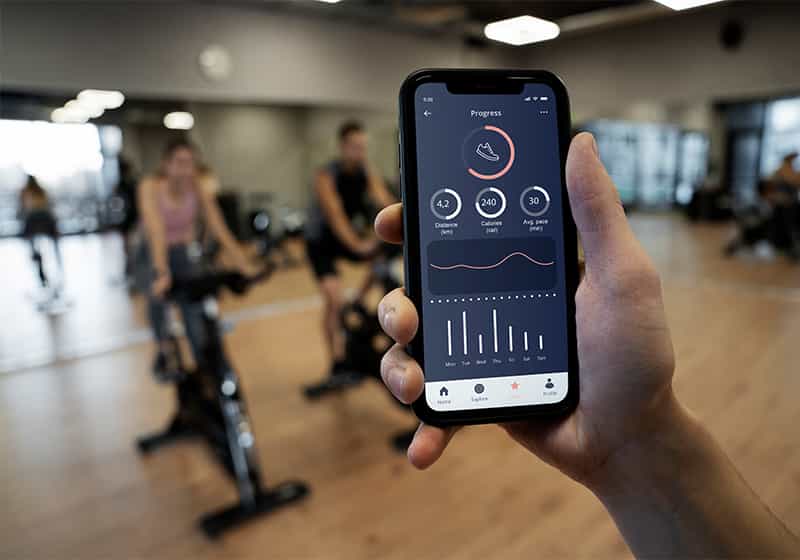
Fitness apps are everywhere in 2026, but not all of them deserve a place on your phone. The best ones do more than offer polished videos or flashy dashboards. They help people stick with exercise, improve consistency, and turn vague health goals into clear behaviors. That distinction matters because long-term results in fitness usually come from adherence, not novelty. Research highlighted by Harvard Health says a 2025 study of more than 500,000 people found that many users of a step-tracking app maintained meaningful increases in daily activity over two years, with about 40% increasing their daily steps by more than 1,000 and lower-activity users showing the biggest gains.
That does not mean every fitness app works equally well. A science-based review should focus on whether an app supports proven behavior-change principles such as self-monitoring, progressive overload, feedback, convenience, habit formation, and social accountability. Recent expert-tested rankings from CNET, WIRED, PCMag, and other review sources suggest that the strongest apps in 2026 tend to fall into clear categories: general training, strength, running, social cardio, and nutrition tracking.
This article ranks the fitness apps that actually work best in the real world and explains why they work from a science and behavior perspective.
What makes a fitness app effective?
An app becomes effective when it reduces friction between intention and action. In exercise science, consistency drives adaptation, whether the goal is better cardiovascular health, strength gains, weight management, or improved mobility. The most useful apps therefore make workouts easier to start, easier to track, and easier to repeat.
Three evidence-backed ideas matter most:
- Self-monitoring improves awareness and adherence, which is why apps that track workouts, steps, pace, calories, or progress tend to be more effective. Harvard Health’s summary of long-term step-tracking research supports this point directly.
- Progressive overload and structured progression matter for strength and endurance results, so apps that adjust training load or organize programs usually outperform random workout generators.
- Motivation improves when users get feedback, rewards, or social reinforcement, which helps explain the staying power of apps like Strava and other community-driven platforms.
In other words, the best app is rarely the one with the most features. It is the one that aligns with how exercise behavior actually changes over time.
1. Nike Training Club
Nike Training Club is the strongest overall fitness app for most people in 2026. CNET names it the best overall workout app because it is free and includes a wide range of classes such as HIIT, strength training, mobility, yoga, and bodyweight sessions. That matters because variety supports adherence, especially for beginners who are still discovering what type of training they enjoy enough to repeat.
From a science-based perspective, Nike Training Club works because it lowers the entry barrier. Users can choose short sessions, different training styles, and beginner-friendly programs without a major financial commitment. This helps solve one of the biggest real-world problems in fitness: dropout caused by complexity or cost.
It also supports progressive training better than many generic workout apps. Structured sessions, coach-led programming, and broad accessibility make it one of the best choices for users who want a practical and evidence-aligned place to start.
2. Apple Fitness+
Apple Fitness+ ranks near the top because it blends guided coaching, wearable integration, and a polished user experience. PCMag includes it among the best workout apps it tested, and WIRED’s 2026 roundup also names it as one of the leading fitness platforms this year.
Its strongest science-based advantage is feedback. When an app integrates closely with heart rate, activity rings, workout history, and other wearable data, users get immediate reinforcement and a clearer picture of effort. That supports self-monitoring, one of the most established behavior-change tools in exercise and health psychology.
Apple Fitness+ is particularly effective for people already inside the Apple ecosystem. It may not be the best choice for users who want heavy strength programming, but for general fitness, consistency, and guided training, it performs extremely well.
3. Strava
Strava is not the best app for every kind of training, but it is one of the most effective fitness apps ever built for motivation and adherence. WIRED includes it in its 2026 best fitness apps list, and the 2026 digital fitness ecosystem report describes Strava as a leading community-driven platform where activity feeds, comments, kudos, challenges, and Apple Watch integrations reinforce engagement.
This is important because exercise behavior is social. For runners, cyclists, and walkers, accountability and visible progress can be as powerful as coaching itself. The social layer creates a sense of identity and consistency that many solo workout apps cannot match.
Strava works best for endurance users who respond to community, milestones, and measurable progression. It is less complete as a total fitness solution, but as a behavior engine for cardio adherence, it is one of the most effective apps available.
4. Fitbod
Fitbod is one of the strongest science-aligned strength training apps in 2026. Garage Gym Reviews highlights it as a great choice for generating workouts based on the user’s goals, equipment, and preferred training style, and notes that it offers strong workout variety at an affordable price.
Its main advantage is adaptive programming. Strength training works best when volume, intensity, and exercise selection are organized over time rather than improvised randomly. Fitbod’s approach of adjusting sessions based on available equipment and prior workouts reflects the logic of progressive overload and recovery management better than many template-only apps.
For intermediate users and gym-goers who want structure without hiring a coach, Fitbod is one of the most practical options. It is especially strong for people who want the app to do the planning while they focus on execution.
5. Jefit
Jefit stands out for serious lifters who want detailed logging, training history, and program management. Jefit’s 2026 review describes it as a comprehensive platform with an exercise library of more than 1,400 movements, workout logging, progress graphs, and AI-driven progressive overload tools in its paid tier.
From a science standpoint, this matters because resistance training outcomes depend heavily on tracking sets, reps, load, frequency, and exercise variation over time. Jefit supports that process well, especially for users who are motivated by measurable progress and performance data.
It is not the simplest app on the list, but it is one of the most effective for long-term strength development. Beginners who plan to get serious about lifting may eventually outgrow more casual apps and appreciate Jefit’s deeper structure.
6. MyFitnessPal
Fitness is not only about workouts, and any science-based review should include nutrition. MyFitnessPal remains one of the most useful apps for weight management, habit awareness, and dietary consistency because tracking intake can improve alignment between eating habits and body-composition goals. Industry coverage in 2026 continues to highlight its large food database and nutrition-planning role.
The app’s effectiveness comes from self-monitoring. Whether a user wants fat loss, maintenance, or muscle gain, logging food creates awareness that most people simply do not have when they eat by memory alone. In behavior terms, that feedback loop is powerful.
MyFitnessPal is not enough by itself, but combined with a training app it becomes much more effective. For users whose goals depend on calorie balance, protein intake, or meal consistency, it remains one of the most practical tools available.
7. Future
Future deserves attention because coaching still works. WIRED includes Future in its 2026 best fitness apps list, and its model is built around personalized coaching rather than pure automation.
This aligns with a simple truth from exercise adherence research: personalization and accountability improve follow-through. An app tied to a real coach can adapt programming, keep users engaged, and reduce confusion, which is often the reason people stop training after a few inconsistent weeks.
The main drawback is cost. Future is not the best choice for everyone, but for users who need higher-touch guidance and consistent accountability, it may deliver better results than cheaper but less personalized alternatives.
8. FitOn
FitOn remains relevant because it combines accessibility and variety. PCMag includes it among the best workout apps, and broader 2026 coverage highlights its broad class catalog and appeal to users who want flexible at-home training.
Its effectiveness comes from reducing barriers. When workouts are easy to access, varied in style, and available for different fitness levels, users are more likely to maintain momentum. That is especially valuable for beginners, parents, and people exercising at home.
FitOn is not as specialized as Fitbod or Strava, but it succeeds because consistency usually starts with convenience. If an app makes movement easier to fit into real life, it has a strong chance of working.
Best apps by goal
Choosing the right fitness app depends on your primary goal more than on overall rankings.
| Goal | Best app | Why it works |
|---|---|---|
| General fitness | Nike Training Club | Free, broad workout variety, easy entry point, structured sessions |
| Apple-based guided training | Apple Fitness+ | Strong wearable integration and immediate feedback |
| Running and cycling adherence | Strava | Community, accountability, challenges, visible progress |
| Strength training automation | Fitbod | Adaptive programming based on goals and equipment |
| Detailed lifting progress | Jefit | Logging, progress analytics, exercise database, overload tools |
| Nutrition tracking | MyFitnessPal | Self-monitoring and diet awareness |
| Personalized accountability | Future | Human coaching and individualized plans |
| Flexible home workouts | FitOn | Variety, convenience, and low barrier to use |
What the science suggests
The science does not support the idea that one app magically transforms fitness. What it does support is that digital tools can help people stay more active when they encourage repeat behavior, provide measurable feedback, and make exercise easier to maintain. Harvard Health’s summary of long-term step-tracking data is especially important because it shows that app-supported behavior change can persist for years, particularly among less active users.
That means the best fitness app is the one that helps you show up consistently. For some people, that is a free general platform like Nike Training Club. For others, it is the social pull of Strava, the adaptive structure of Fitbod, or the accountability of a coach-led option like Future.
In 2026, the apps that actually work are not the ones with the flashiest marketing. They are the ones built around principles that exercise science has supported for years: track behavior, progress gradually, reduce friction, and make consistency easier than quitting.